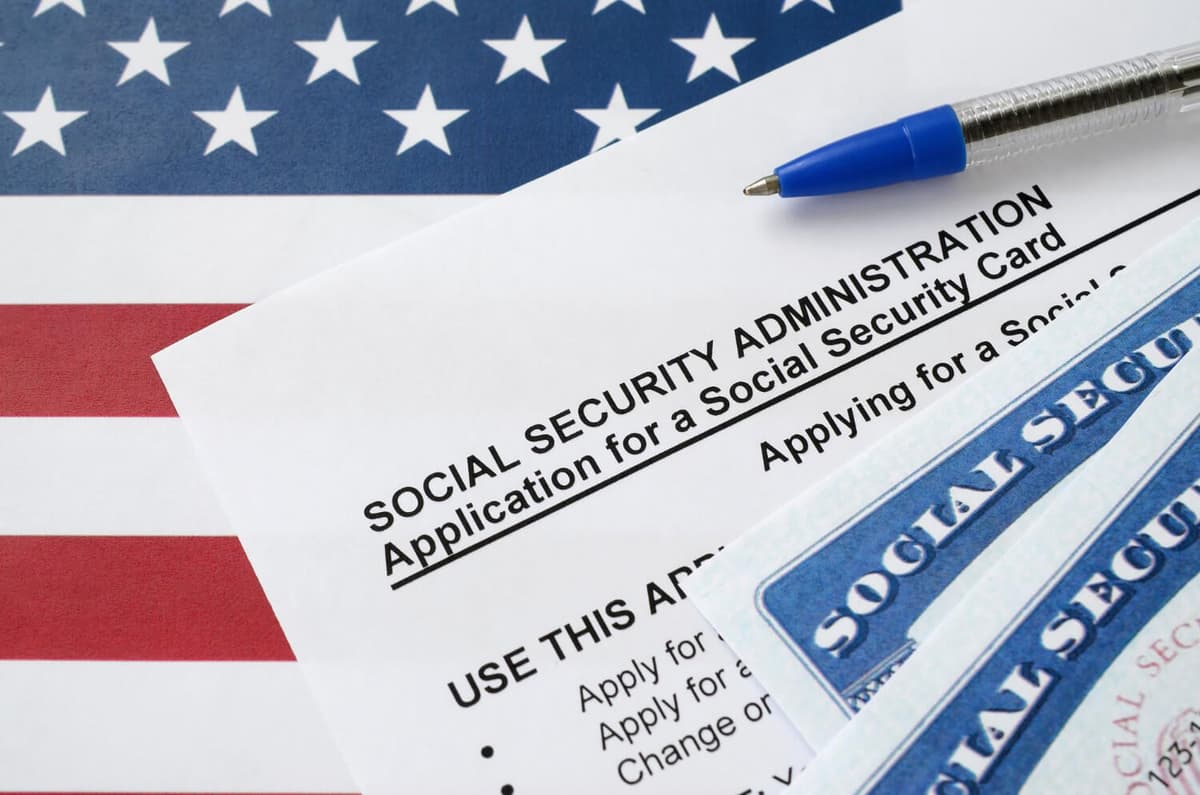
A Social Security Number (SSN) is a unique nine-digit number used in the United States to record earnings and taxes and to obtain certain government services and benefits.
For immigrants and other foreign nationals, how an SSN is obtained depends on their immigration status and their right to work in the United States. In some cases the number can be requested during the immigration process itself; in others, together with an application for a work permit or a Green Card.
What an SSN is
The Social Security Number is issued by the Social Security Administration (SSA). For foreign nationals working in the United States, employers use the SSN to report wage information to government bodies. The number is also tied to the record of earnings for Social Security purposes.
An SSN may be needed for various financial and administrative matters, but not everyone in the United States is required to have one.
Who can get an SSN
In general, foreign nationals can obtain an SSN if they have permission to work in the United States from the Department of Homeland Security (DHS).
Documents and statuses of this kind may include, for example:
- a Green Card — Form I-551;
- an Employment Authorization Document (EAD) — Form I-766;
- certain categories of admission shown on an I-94 or a passport stamp;
- some categories of foreign students and exchange visitors, where additional conditions are met.
If a person has no right to work, an SSN cannot usually be obtained purely for convenience. There are, however, separate exceptions where federal, state or local law requires an SSN in order to receive a particular government service or benefit.
When it is best to apply
Immigrants obtaining permanent residence through an immigrant visa can request an SSN while the immigrant visa is being processed. When filling in Form DS-230 or the electronic form DS-260, the applicant can indicate that they want an SSN and a card. If the visa is granted, the information is passed to the government agencies, and once the person enters the United States the SSA assigns a number and sends the card to the address given. In many cases this avoids a separate visit to an SSA office after the move.
Getting an SSN through an immigrant visa
If you are applying for an immigrant visa outside the United States, the most convenient option is to request the SSN as part of the immigration application itself.
The process works like this:
- You fill in the DS-260 or the relevant immigration form.
- You indicate that you want an SSN.
- The State Department passes the necessary data to DHS.
- Once you are admitted to the United States, the information goes to the SSA.
- The SSA assigns the SSN and sends the card to the address given in the application.
According to the SSA, using this process usually means no separate visit to a Social Security office is needed.
Getting an SSN after entering the United States
If an SSN was not requested during the immigrant visa process, in some situations it can be obtained after arrival in the United States. Someone applying for a work permit on Form I-765, for example, can request an SSN at the same time. The same option exists with certain applications for permanent residence on Form I-485.
In that case USCIS passes the necessary information to the SSA, so a separate application at a Social Security office is not usually needed.
An SSN together with a work permit
If you are filing Form I-765 for an EAD, look at the section relating to the Social Security Administration. If you request an SSN through the I-765, USCIS passes the information to the SSA once the application is approved.
According to the SSA, the SSN card should normally arrive separately no later than 14 days after you receive the EAD. If the card has not come within that time, contact your local SSA office.
An SSN together with a Green Card
An applicant for permanent residence in the United States can in certain cases also request an SSN through Form I-485. If the relevant request is completed, USCIS will pass the information to the SSA once the application is approved. The SSA says the SSN card is normally sent no later than 14 days after the Green Card arrives.
What to do if the SSN does not arrive
If you have already received your immigration document, EAD or Green Card but no SSN card has come, first check that the address given in the immigration application is correct. If the stated period has passed, contact the SSA or go to a local office.
The SSA recommends using its official Field Office Locator to find the nearest office. Since 2026 the SSA has also expanded its online SSN application service. Depending on the situation, the system may handle the request online or direct the applicant to book an office appointment.
How to apply at an SSA office
If you cannot obtain an SSN automatically through the immigration process, you have to go to the Social Security Administration. Before your visit, prepare original documents, or copies certified by the body that issued them. The SSA does not accept ordinary photocopies or notarised copies of documents. Nor can you rely on a receipt showing only that you have applied for an immigration document.
What documents are needed
To obtain an SSN you normally have to prove:
- your identity;
- your age;
- your immigration status;
- your right to work, if the SSN is being requested for employment.
Depending on the situation, these may be used:
- a valid foreign passport;
- a Green Card;
- an EAD;
- an I-94;
- an admission stamp for the United States;
- a birth certificate;
- an I-20 for certain F-1 and M-1 students;
- a DS-2019 for certain J-1 and J-2 exchange visitors.
The exact list depends on the applicant's status.
How many documents are needed
The SSA normally requires at least two separate documents proving the necessary details. In some cases one document can prove several things at once. A DHS immigration document, for example, can prove both identity and the right to work. So before your visit, check the current list of documents for your particular category.
What an SSN costs
Obtaining a Social Security number and card is free. If anyone offers to charge you a government fee specifically for the issue of an SSN, check carefully what service the charge is actually for.
How long the card takes
The time depends on how the application was made and on whether immigration status has to be verified further. Where the number is arranged automatically through the immigration process, the SSA says the card should normally arrive shortly after entry or after the relevant immigration document is received.
Where the application is made directly to the SSA, the standard time also depends on how quickly the documents produced can be verified. If the SSA cannot confirm immigration status with USCIS straight away, processing can take longer.
Can you work without an SSN
Not having the SSN card itself does not always mean you have no right to work. The right to work is determined above all by your immigration status and your work permit; the SSN is what an employer uses to report earnings. Even so, an SSN is often needed to set up employment, or becomes necessary once it has been obtained. If you are allowed to work but are still waiting for an SSN, discuss the particular situation with your employer and, if necessary, check the SSA and USCIS requirements.
What students should do
For foreign students the rules differ by category. F-1 students, for example, may be eligible for an SSN if they have the relevant grounds for working and the necessary documents, including the I-20. Some J-1 exchange visitors need a DS-2019. Simply studying in the United States does not automatically give a right to an SSN.
SSNs and tax
An SSN is often used for tax reporting, but not every foreign national receives one. If a person is not eligible for an SSN but has tax obligations to meet, an Individual Taxpayer Identification Number (ITIN) can be used in certain situations.
The ITIN is issued by the IRS and differs from an SSN. It is intended for tax purposes and is not permission to work.
Do you always have to carry your SSN card
A Social Security card carries sensitive personal information, so it should be handled carefully. There is usually no need to carry the original card with you all the time. It is better kept somewhere safe, and the number given out only when it is genuinely needed. Do not tell strangers your SSN unnecessarily or send a photograph of the card through channels you cannot trust.
What to do if the card is lost
Losing the card does not mean losing the number. Depending on the circumstances, you can ask the SSA for a replacement card. You will have to prove your identity and your status. Remember that the SSN itself stays the same — it is the card that is replaced.
What to do about an error in your name
If your name or other personal details are wrong in the SSA's records, contact the SSA to have the record corrected.
It is particularly important that your name, date of birth and other details match your immigration documents. Discrepancies can cause problems with employment, tax reporting and dealings with government bodies.
The main points
Getting an SSN is an important administrative step after moving to the United States, especially for people who are entitled to work. For new immigrants, the most convenient option may be to request the number at the same time as the immigrant visa, through the DS-260. For people already in the United States, an SSN may come through Form I-765, Form I-485 or other grounds.
Obtaining an SSN is free, and an application in person requires originals or documents certified by the issuing body. Since 2026 the SSA has also offered an expanded online process that helps determine how to apply and, where needed, book an office appointment.
Because the requirements depend on immigration status, check the current instructions on the official Social Security Administration website before you apply.
End of the article.
All guides →