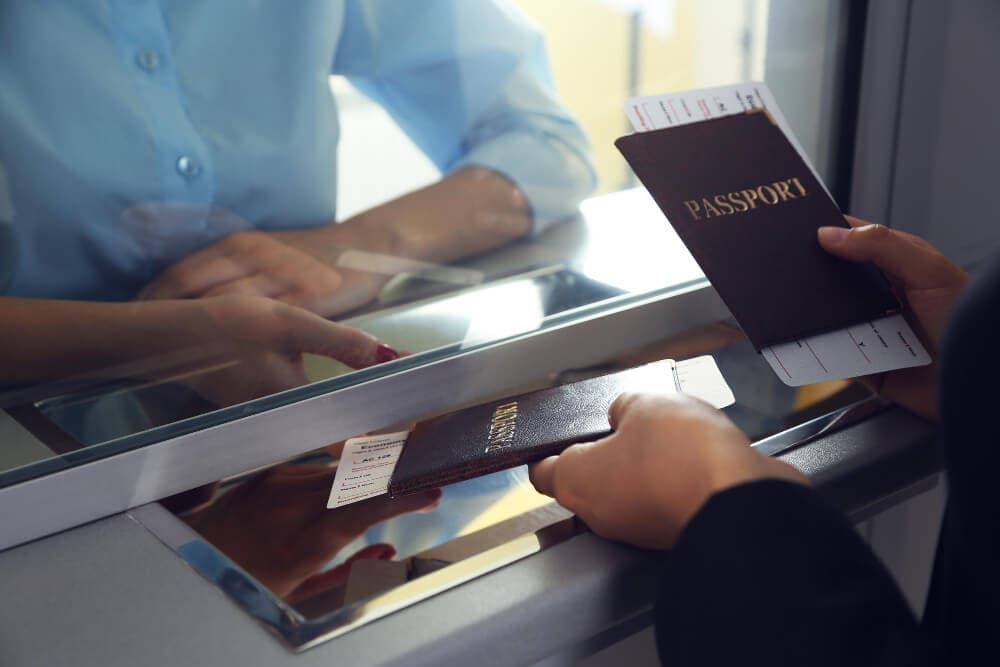
Every foreign national arriving in the United States has to go through passport control. It is at this point that a border officer takes the final decision on whether to allow entry. Even where a traveller holds a valid visa, the visa alone does not guarantee that they can cross the border.
For many people the first encounter with an immigration officer is the most nerve-racking moment of the whole trip. In reality the procedure is fairly standard, and thousands of people go through it every day. If the documents are ready and the purpose of the trip matches the visa, control usually takes only a few minutes.
What happens after you land
Once off the plane, passengers follow the signs for Immigration, Passport Control or Arrivals. At many large airports there is first a long corridor to walk, after which passengers reach the main passport control hall.
Before the checks themselves, separate queues form for US citizens, for permanent residents and for foreign nationals. Airports sometimes use automated self-service kiosks for certain categories of passenger, but most foreign visitors still go through a check with an officer in person.
When their turn comes, the traveller hands the officer their passport and any other necessary documents. A short interview then follows, in which the officer asks about the purpose of the trip and checks the information in the database.
Once the check is over, fingerprints are usually taken and a digital photograph made. The whole thing takes a matter of seconds and is a standard part of immigration control. If nothing comes up, the traveller is admitted and goes on to collect their baggage and pass through customs.
What questions may be asked
During the interview the immigration officer assesses not only the documents but the traveller's answers. The officer's main task is to be satisfied that the person really is coming for the purpose their visa allows. The questions are usually fairly simple. They may ask why the person has come to the United States, how long they plan to stay, where they will be staying and whether they have a return ticket. Sometimes they ask about your place of work or study, or who is paying for the trip.
It is important to answer calmly, confidently and honestly. Do not invent extra detail or try to hold information back. If the officer asks a follow-up question, answer that question rather than telling a long story. If the traveller is visiting relatives or friends, it helps to know their address and contact details. On a business trip it is advisable to remember the name of the company you are meeting.
Most interviews take only a few minutes. If the answers match the documents, further questions do not usually arise.
Do you need to speak English
Fluent English is not a requirement for entering the United States. Millions of tourists arrive every year with almost no English, so airport staff meet such situations regularly.
If a person understands simple questions and can answer them briefly, that is usually quite enough. Some people write down the main phrases beforehand or print out their hotel address, travel itinerary and other important information. In some cases staff can use an interpreter or call a colleague who speaks the language needed. The main thing is not to get flustered and not to try to answer questions you have not understood.
Which documents it is best to carry
Although a passport and visa are enough in many cases, having additional documents makes control considerably easier.
It is advisable to prepare in advance:
- confirmation of your accommodation booking;
- a return ticket;
- your travel itinerary;
- an invitation from your host (if you have one);
- proof of funds;
- contact details for relatives or an employer.
Even if the officer does not ask to see these documents, they may be needed if further questions come up.
The biometric check
Almost all foreign nationals go through biometric registration. The system records fingerprints and takes a photograph of the face. The data is used solely to identify the person and to check compliance with immigration law. The whole thing takes under a minute and is done during the conversation with the officer.
How long the check takes
The time depends above all on the airport and on how many flights are arriving. At busy international airports the queue can sometimes take more than an hour, especially in the tourist season. The conversation with the officer itself rarely lasts longer than a few minutes. If a passenger is sent for a further check, the total time in the control area can be longer.
What secondary inspection is
Sometimes, after the first conversation, the officer asks you to go to a separate area called Secondary Inspection. For many travellers being sent there is a cause of great anxiety, but in practice it does not mean automatic refusal of entry. Secondary inspection happens every day and is used in all sorts of situations. The officer may need to verify information in the documents, clarify the purpose of the trip, confirm an accommodation booking or wait for the results of checks in information systems. Sometimes it is because a surname matches someone else's, or because previous trips need checking.
During secondary inspection you may be asked to produce supporting documents, explain details of your itinerary or simply wait for the check to finish. In most cases, once everything is done, the traveller is admitted to the United States.
The main rule is to stay calm, answer honestly and do as the immigration officers ask.
What not to do
There are simple rules of conduct to follow during control.
It is not advisable to:
- give false information;
- argue with the officer;
- use your phone without permission;
- joke about security;
- conceal the real purpose of your trip.
Even a small discrepancy between the documents and your answers can lead to further questions.
What happens once entry is granted
Once you are through control, the officer records the permitted period of stay in the system. It is that date that determines how long the person may remain in the United States. It matters considerably more than the validity of the visa, because it is the permitted period of stay that the immigration authorities monitor.
The traveller then collects their baggage, goes through customs and comes out into the arrivals area.
Possible reasons for refusal
Although most travellers get through control without trouble, entry is sometimes refused.
The reasons can be:
- giving false information;
- breaches of immigration rules in the past;
- no convincing explanation of the purpose of the trip;
- suspicion of an intention to work illegally;
- not enough supporting documents.
Every decision is taken individually, after the particular situation has been assessed.
Useful advice
Before travelling it is advisable to check the expiry date of your passport, prepare copies of important documents and keep them both on paper and electronically.
If your accommodation has changed since the visa was issued, it is advisable to print out the current booking confirmation in advance. It helps to remember the address you are staying at, your itinerary, the dates of your return flight and the basic details of your host.
Passport control is an ordinary procedure that thousands of foreign nationals go through every day. For most travellers it takes only a few minutes and causes no difficulty at all.
The main things are to have valid documents, to keep to the conditions of your visa and to answer immigration officers' questions honestly. Good preparation greatly reduces the anxiety and lets you start your stay in the United States calmly.
End of the article.
All guides →