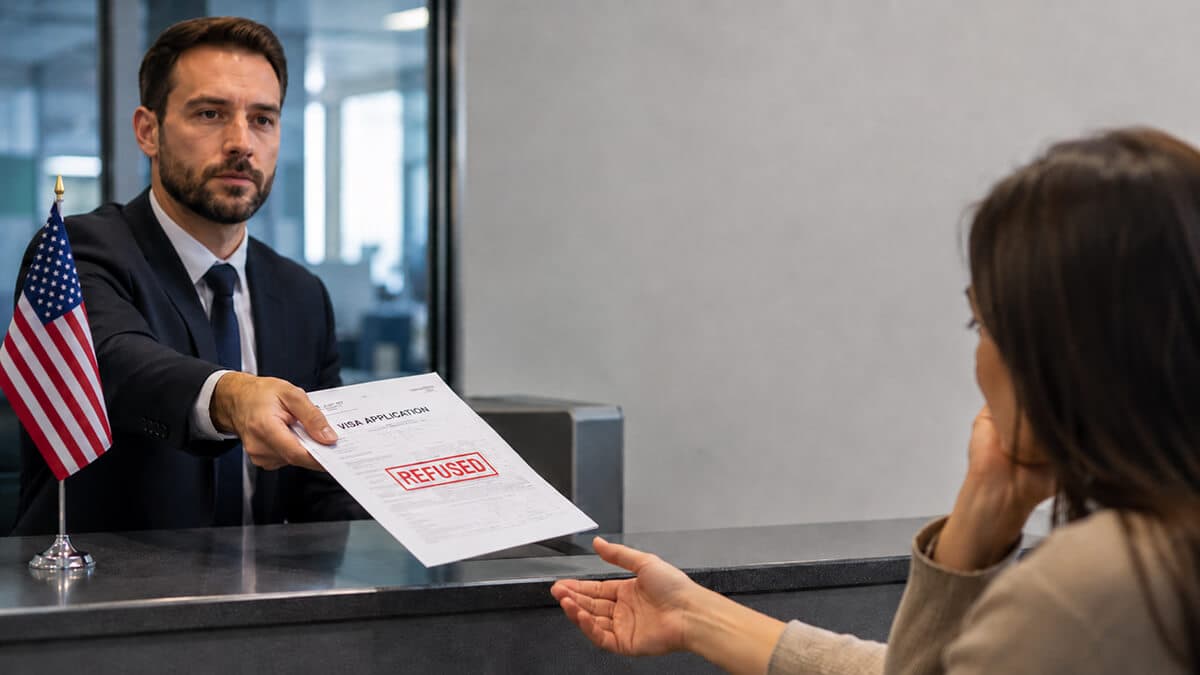
A refusal of an American visa is an unpleasant situation, but far from always a final one. In some cases you can apply again; in others you can supply the missing documents or wait for a further check to finish.
The main thing after a refusal is to understand the reason for the decision and the section of the law it was made under. Applicants most often meet three grounds: 214(b), 221(g) and 212(a). Each one means an entirely different situation and calls for different action.
Refusal under section 214(b)
Section 214(b) is one of the commonest reasons for refusing US non-immigrant visas, including tourist and visitor visas. The consular officer has to be satisfied that the applicant meets the requirements of the visa category chosen and, where the trip is temporary, really does plan to leave the United States when it ends.
The application is assessed as a whole: the purpose and length of the trip, work, financial position, family circumstances, previous travel, relatives in the United States and the answers given at the interview. A refusal can follow, for example, if the purpose of the trip looks unclear, if the applicant gives inconsistent answers, if what is said at the interview does not match the DS-160, or if the trip is too long and sits awkwardly with the applicant's work or finances. It is important to understand that neither a flat, nor a large sum in a bank account, nor a high salary guarantees a visa on its own.
Can you apply again after a 214(b)?
Yes. This kind of refusal is not for life, and the applicant can apply for a visa again. There is usually no simple review of the earlier decision, though — you have to file a new application and go through the whole procedure again. Before reapplying, ask yourself the main question: what has changed since the last refusal?
If you file an almost identical form with the same circumstances a few days later, the result may well be the same. It makes sense first to recall the consular officer's questions, check your answers, reread the DS-160 and work out whether there were any contradictions.
Changes that can matter include a new job, a change of position or income, starting a business, a change in your family situation, a new purpose for the trip or other material circumstances.
Are relatives in the United States a reason for refusal?
Having relatives in the United States is not in itself a ground for automatic refusal. But the consular officer can take the information into account and ask who you are visiting, where you will be staying, who is paying for the trip and how long you plan to spend in the country.
Do not hide relatives or invent a different purpose for the trip. If you really are going to visit a child, parents or other close family, it is better to say so honestly.
Why you should not learn "the right answers" by heart
Online you will find advice like "don't say you're visiting relatives", "say you'll only be in the United States for a week" or "be sure to show a big bank balance".
There is no universal script for a successful interview. Your answers have to match your real situation and the details on the form. Trying to invent a more "advantageous" story can lead to contradictions and prompt further questions.
Giving false information or forged documents is especially dangerous. An ordinary 214(b) refusal does not shut off the possibility of a visa in future, whereas deliberately misrepresenting material information can have far more serious consequences.
What a 221(g) refusal means
Section 221(g) usually means that the consular officer does not yet have enough information to make a final decision. Most often the applicant has to supply additional documents, or the application goes to Administrative Processing — a further administrative check.
If the consulate has asked for particular documents, it is important to provide exactly those and to follow the instructions you were given. There is no need to send dozens of extra certificates on your own initiative if they were not asked for. Administrative processing does not mean an automatic final refusal either. Sometimes an application needs further checks, and how long they take depends on the individual case.
Even where the CEAC system shows the status Refused, with a 221(g) the case may in some instances still be under further consideration. So go above all by the official notice and the consulate's instructions.
What section 212(a) means
Section 212(a) covers more serious grounds of visa ineligibility. Depending on the particular subsection, these can be certain breaches of immigration law, unlawful presence in the United States, some criminal offences, deportation, fraud or material misrepresentation.
If the notice cites 212(a), look not only at the section number but at the particular subsection. The consequences can differ greatly.For some grounds the law provides for a waiver — a special permission that allows a particular ground of ineligibility to be overcome. But a waiver is not available in every case and does not guarantee a visa.
Where there is a complicated immigration history, a deportation, a long period of unlawful presence, allegations of fraud or criminal matters, it is better to go to a qualified US immigration lawyer.
Overstaying in the United States
Do not confuse the validity of the visa with the period of stay you are permitted. Even if a visa is issued for several years, that does not mean a person can be in the United States for that whole period without a break.
Overstaying the permitted period can affect later visas and in some situations lead to serious restrictions. So do not hide past breaches or an overstay when you make a new application.
Which documents can help
There is no universal folder of documents that guarantees a visa. Depending on the situation, information about work, income, a business, study, the purpose of the trip, relatives, an invitation or a particular event may all matter.
But documents have to reflect the real situation. A large sum that appears in a bank account just before the interview, for example, does not by itself make an application convincing. The same goes for an invitation from relatives or friends: it can confirm the purpose of the trip, but it does not guarantee a visa.
What to do after a refusal
Once you have been refused, it helps to work through it in order:
- Look at which section is cited in the notice.
- Recall the questions and your answers at the interview.
- Compare them with the information on the DS-160.
- If 221(g) is cited, follow the consulate's instructions and provide the documents asked for.
- If it is 214(b), consider whether your circumstances have changed before you reapply.
- If the refusal involves 212(a), deportation, a breach of status or possible fraud, consider consulting an immigration lawyer.
The main points
A US visa refusal is not always the end of the process. What matters is identifying the reason correctly and choosing what to do next.
With a 214(b), analyse the application and any changes in your circumstances. With a 221(g), follow the consulate's instructions and provide the information required. With a 212(a), work out the particular ground and, if necessary, take legal advice.
And most important of all — do not try to build a "perfect story" for the consulate. Truthful information, a clear purpose for the trip and consistent answers matter far more than rehearsed phrases and dubious advice.
End of the article.
All guides →