After moving to the United States, a mobile phone service is one of the first practical tasks. You will need an American number for employers, banks, landlords, government offices and all sorts of online services. Choosing a plan is not always simple, though. The United States has large mobile operators, budget brands and prepaid plans, as well as the option of using an eSIM without buying a physical SIM card.
Before signing up it is important to decide what exactly you need: a cheap plan for the first while, reliable internet, a family plan, or a full contract with an operator.
What mobile options there are in the United States
Broadly, there are two main kinds of service in the United States — prepaid and postpaid. Prepaid means you pay for the plan in advance and then use the service for the period you have paid for. That option is particularly convenient for new immigrants who do not yet have an American credit history or a bank account.
Postpaid means paying regularly after you have used the service. These plans often offer extra features, family rates and various discounts, but signing up may require additional details and a credit check. For the first weeks after moving, a prepaid plan is often the simplest option.
The large mobile operators
Several large operators work in the American market, and their infrastructure is also used by numerous budget brands.
The best known are:
- AT&T;
- T-Mobile;
- Verizon.
Besides them there are dozens of cheaper mobile brands that use the large operators' networks. So a lower price does not necessarily mean poor coverage.
The main thing is to check which network the plan you have chosen actually uses and how well it works in your city and in the places where you will spend a lot of time.
Prepaid or a regular plan?
If you have only just arrived in the United States, prepaid may be more convenient for several reasons. There is usually no long-term contract to sign, and you can get connected fairly quickly. You simply pay for the period you have chosen and use the service.
That option is convenient if you:
- are still looking for permanent work;
- have not opened a bank account yet;
- do not know which operator works best in your area;
- want to test the service first;
- do not want to take on a long-term plan straight away.
Once you have settled in, you can move to a different plan if it turns out to be better value.
What mobile service costs
The cost depends on the number of lines, the amount of mobile data, the type of plan and any extra services. Budget prepaid options can be relatively inexpensive, while plans from the large operators with a lot of data, extra services and several lines can cost considerably more.
When comparing plans, look at more than the price in the advertisement. The final cost can include taxes, fees and additional services. Some companies also offer an attractive price only if you sign up several lines or use automatic payment.
How much mobile data you need
For most people who use Wi-Fi at home and at work, a huge mobile data package is unnecessary. If you use your phone mainly for messaging, navigation, email and social media, a moderate amount of data is enough.
If you often watch video, work over mobile internet or use your phone as a hotspot for a laptop, you will need considerably more. Before choosing a plan it helps to look at the data usage statistics on your phone for the last few months.
eSIM or an ordinary SIM card
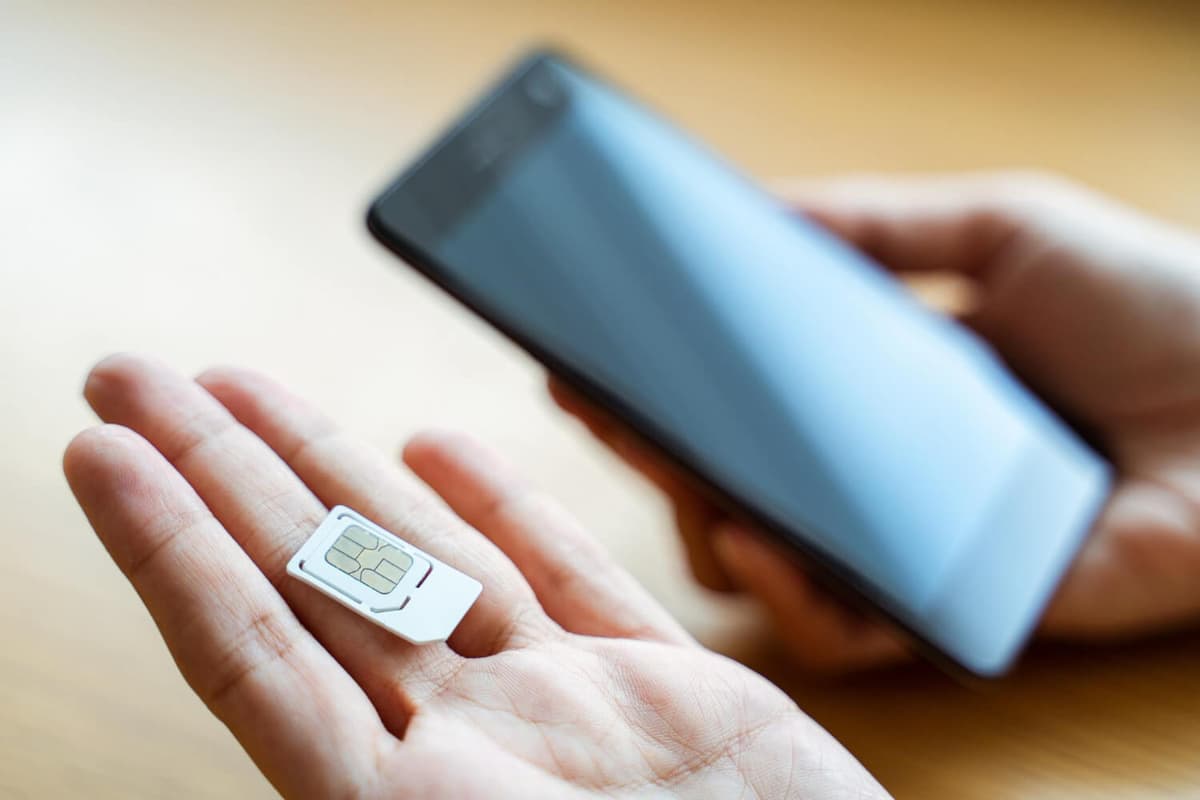
Modern smartphones let you use an eSIM — an electronic SIM card with no physical chip to install. For a new immigrant this can be a very convenient option. You can buy a plan online and activate it almost as soon as you are connected to the internet.
A physical SIM card remains a convenient option too. You can buy one at an operator's shop, at some large stores and at other outlets. If your phone supports eSIM and is not tied to another operator, that option is worth considering.
Check whether your phone is unlocked
Before buying an American SIM card you have to make sure your smartphone is unlocked — that is, not tied to a particular operator.
If the phone is locked by an operator in the country where it was bought, an American SIM card may not work. It is also worth checking which mobile network frequencies the phone supports. Older phones, and some regional models, may not work on all the bands used in the United States.
Can you keep your old number
If you are moving to the United States, keeping your old number for banks, messaging apps and other services can be convenient. In some cases you can use the old SIM card to receive text messages and add an American number as a second line through an eSIM.
Before doing that, though, check what roaming costs with your previous operator. It is especially important to avoid a situation where the phone automatically starts using mobile data through a foreign SIM card.
An American number for banks and services
After moving you may need an American number to register with various services. Banks, apps, delivery services, employers and other organisations may use text messages or phone calls to confirm your identity. So do not disconnect your old SIM card straight away if it is used for important accounts. It is better to make sure first that access to your banking apps, your email and other services is set up reliably.
Family plans
If several people are moving to the United States, it is worth comparing individual and family plans. Operators often reduce the cost of a line when several users are added. So for a family of three or four a shared plan may be better value.
You do have to read the terms carefully, though: how much data each line gets, whether there are speed limits, whether international calling is included and what additional charges there are.
International calls
If you plan to call relatives in another country often, check the terms for international calling. An expensive plan from a large operator is not automatically the best option for international calls. For talking to relatives you can use internet messengers, video calls and other apps. That way you do not overpay for ordinary international calls.
International calling and roamingIf you are going to travel regularly between the United States and another country, look at the international roaming terms.
Some plans include a certain amount of data and messaging abroad, others require extra payment. If you cross the border often, this may be one of the main criteria when choosing a mobile plan.
Where to buy a SIM card
A physical SIM card can be bought directly from a mobile operator or in shops that sell mobile plans. Before buying, though, it is best to check the operator's official website. Sometimes the plans available online differ from the offers in an ordinary shop. For an eSIM, in many cases there is no need to visit a shop at all.
What you need to sign up
For a prepaid plan the procedure is usually fairly simple. You will need a compatible phone and a way of paying. A postpaid plan may require additional details and, in some cases, an American address and other information.
If you have only just arrived and do not yet have a credit history, prepaid often lets you avoid some of the difficulties. What to look at when choosing a planDo not choose a plan purely on the number of gigabytes or the lowest price.
Check:
- coverage in your city;
- the quality of the signal at home and at work;
- mobile internet speed;
- the amount of data;
- whether you can share your connection;
- international calls;
- roaming;
- the cost of additional lines;
- taxes and fees;
- the terms for automatic payment.
It is especially important to check coverage exactly where you will be living and working. A coverage map on an operator's website gives a general idea, but the real quality of the signal inside a particular building can be different.
What to choose in the first weeks after moving
If you have only just arrived in the United States and do not yet know which operator will suit you best, an inexpensive prepaid plan can be a sensible decision.
You can use it as a temporary option while you:
- open a bank account;
- find a job;
- find permanent housing;
- sort out your documents;
- look at the plans available.
After that you can move to a better-value plan or a family rate.
Common mistakes
One of the commonest mistakes is choosing an expensive long-term plan straight away without checking the quality of the signal in your area. Another is not allowing for taxes and additional fees when comparing costs. Do not forget to check either whether your phone is unlocked and whether it supports the mobile bands you need.
After moving to the United States it is best to get a mobile service as soon as you can. You will need an American number for work, for banking, for renting a home and for a great many everyday tasks. A prepaid plan can be a particularly convenient option to begin with: it is easier to set up, and you can replace it with another plan if you need to.
Before choosing an operator, compare coverage, cost, the amount of data, the terms for international calling and the additional charges. If your smartphone supports eSIM, getting connected can be much simpler.
The main thing is not to choose a plan on the strength of advertising alone. Check first how well the network you have chosen works in your particular area.
End of the article.
All guides →